
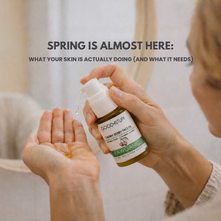
After months of winter wind, wood-stove heat, and dry indoor air, your skin has been in survival mode.
Then something subtle happens.
The days stretch longer. Snow melts. The air softens. And your skin quietly starts shifting gears.
Spring isn’t just a change in weather — it’s a biological transition. Your skin begins adjusting to temperature, humidity, sunlight, pollen, and longer daylight hours, and those changes affect oil production, hydration, and even the behavior of your skin cells.
Think of it as your skin waking up after hibernation.
Let’s talk about what’s actually happening.
What Winter Did to Your Skin
Winter in northern climates (hello Montana) tends to leave skin with three major issues.
A Sluggish Skin Barrier
Cold temperatures and low humidity pull moisture from the skin, leaving it dry, tight, flaky, and dull.
During winter, the skin’s protective barrier — sometimes called the acid mantle — often becomes disrupted. This delicate film of lipids and acids helps defend against microbes and maintain moisture balance.
When it’s compromised, skin can feel rough, sensitive, and reactive.
Built-Up Dead Skin
Lower humidity slows the natural shedding of skin cells. Dead cells accumulate on the surface, which is why winter skin often looks:
-
dull
-
uneven
-
slightly rough
It’s not that your skin forgot how to glow — it just has a thick winter coat on.
Dehydration (Even if Your Skin Feels Oily)
Skin can actually be dry and oily at the same time. When the barrier is dehydrated, the body sometimes produces more oil to compensate.
This is why winter skin can feel both tight and shiny.
What Happens When Spring Arrives
Now the environment changes — and your skin responds immediately.
Oil Production Increases
As temperatures rise, sebaceous glands naturally begin producing more sebum.
Sebum is actually beneficial — it lubricates the skin and helps maintain moisture — but when combined with sweat, pollen, and environmental debris, it can clog pores.
This is why people often notice:
-
more shine
-
seasonal breakouts
-
congestion around the nose and chin
Spring is when the skin transitions from protection mode → regulation mode.
Humidity Returns (Which Is Good News)
Spring air usually contains more moisture than winter air. That means your skin loses less water to the environment — something scientists call transepidermal water loss.
In simple terms: your skin holds onto hydration more easily.
This is why many people feel like their skin suddenly looks healthier in the spring.
But it also means heavy winter creams can start feeling too thick.
Sun Exposure Increases
Spring sun feels gentle, but UV radiation climbs quickly as days lengthen.
That exposure can trigger:
-
pigmentation
-
collagen damage
-
inflammation
-
early aging
Even cloudy spring days still allow UV rays through the atmosphere.
Your skin knows the sun is coming before you do.
Environmental Stress Returns
Spring also brings something else: pollen and allergens.
These tiny particles can settle on the skin and trigger irritation, redness, or puffiness — especially around the eyes and cheeks.
For people with sensitive skin, spring can sometimes mean:
-
itchy patches
-
mild inflammation
-
rosacea flareups
What Skin Actually Needs in the Spring
Spring skincare isn’t about doing more.
It’s about changing rhythm.
Think of it as helping your skin transition out of winter.
Gentle Exfoliation (Wake the Skin Up)
Removing winter’s buildup of dead skin cells allows fresh skin to surface.
This can improve:
-
glow
-
texture
-
absorption of oils or serums
But gentle is the key word. Over-exfoliating can damage the skin barrier and cause irritation.
Nature already provides many mild exfoliating compounds in fruits and plants.
Bright spring botanicals — like cherry and berry extracts — naturally contain fruit acids and antioxidants that help encourage renewal while supporting the skin barrier.
Hydration — But Lighter
Your skin still needs moisture.
Just not the heavy winter blanket.
Spring hydration should focus on:
-
water-binding ingredients
-
lightweight oils
-
humectants
-
botanical infusions
This helps maintain elasticity without clogging pores.
Antioxidants (Your Skin’s Shield)
As sunlight and outdoor activity increase, antioxidants become essential.
They help neutralize free radicals generated by UV exposure and pollution.
Many plants naturally contain protective compounds such as:
-
polyphenols
-
vitamin C
-
flavonoids
-
anthocyanins
Berries are especially rich in these molecules — which is why they’ve been used traditionally in both food and skincare.
Barrier Repair
Even as humidity rises, your skin barrier may still be recovering from winter.
Supporting it with nourishing plant oils, minerals, and botanical extracts helps restore balance.
Healthy skin isn’t just hydrated — it’s resilient.
Spring Botanicals to Look For
If you start reading ingredient labels this time of year, you’ll notice something interesting: many spring skincare formulas lean heavily into fruits and berries.
That’s not just for the pretty color.
Many berries evolved in harsh environments where they had to protect themselves from intense sunlight and environmental stress. To survive, they produce high levels of protective compounds — antioxidants, carotenoids, polyphenols, and natural UV-absorbing molecules.
When used in skincare, those same compounds can help support the skin against oxidative stress and sun exposure.
A few particularly interesting botanicals show up again and again in spring formulations.
Cloudberry
Cloudberry grows in northern climates and tundra environments where the sun can be surprisingly intense during long summer days. To protect itself, the plant produces high levels of ellagic acid and carotenoids, powerful antioxidants known to help neutralize free radical damage from UV exposure.
Cloudberry oil also contains a rare balance of omega fatty acids that support the skin barrier and improve moisture retention.
Because of these compounds, cloudberry is often associated with a mild natural SPF effect, helping reinforce the skin’s defenses when paired with other sun protection.
Goji Berry
Goji berries have been used for centuries in traditional herbal systems and are incredibly rich in vitamin C, carotenoids, and polysaccharides.
These compounds help support collagen health and reduce oxidative stress in the skin. Goji also contains natural pigments that can absorb portions of the UV spectrum, which is why it’s sometimes referenced in skincare as providing light botanical UV support.
Think of it less like sunscreen and more like a nutritional shield for the skin.
Cherry
Cherries are loaded with anthocyanins, the deep red pigments responsible for their vibrant color. These compounds are powerful antioxidants that help protect skin from environmental damage and support overall skin brightness.
Cherry extracts and oils are also rich in vitamins A and C, which can help encourage cell renewal while soothing irritation from wind, sun, and seasonal changes.
Like other deeply pigmented fruits, cherries contain compounds that can offer minor natural photoprotection, helping the skin cope with increased spring sunlight.
The Real Secret to Spring Skin
Your skin already knows how to heal itself.
The goal isn’t to fight it.
It’s to support what it’s naturally trying to do — transition, rebalance, and renew.
And just like the plants waking up outside your window, your skin is preparing for a season of growth.
So if your face suddenly feels brighter, softer, or a little more alive…
That’s not a coincidence.
That’s spring.