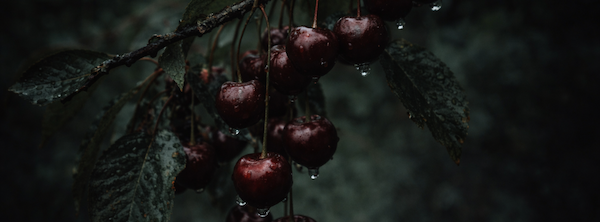
Cherries have spent most of history being underestimated. Cute? Sure. Delicious? Obviously. But beneath that glossy skin is a lineage that’s older, wilder, and far more culturally loaded than the modern fruit bowl gives it credit for. Long before they became pie filling or cocktail garnish, cherries were seasonal markers, medicinal allies, spiritual symbols, and—depending on who you asked—literal conduits between worlds.
Across continents and centuries, people didn’t just eat cherries; they read them, revered them, and relied on them. From blossoms that signaled divine favor, to trees that guarded households, to bark that carried healing spirits, cherries have always been more than a snack. They’re a story. A cycle. A tiny, tart embodiment of renewal and resilience.
So in this chronicle, we’re going deeper than flavor. We’re looking at the history, the folklore, the science, and the modern-day benefits that make cherries one of the most quietly powerful botanicals out there. Consider this your invitation to meet the cherry in its full complexity—mythic roots, antioxidant flex, and all.
A Brief (and Juicy) History
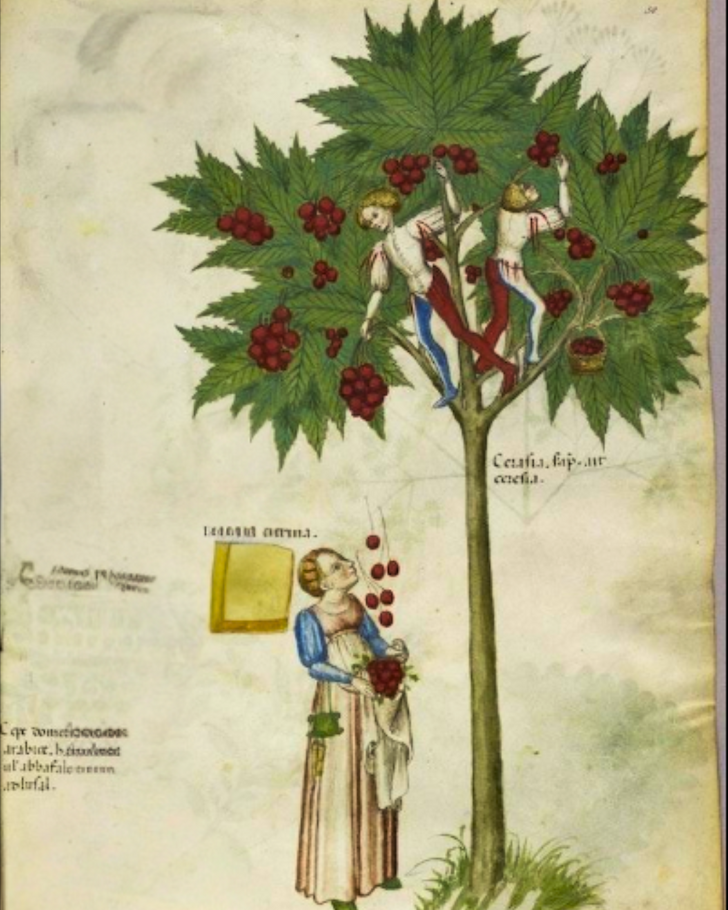
An early depiction of cherry harvest from the Vienna Tacuinum Sanitatis,a 14th-century manuscript now housed in the Austrian National Library.
Cherries have been doing their thing for thousands of years, long before they were Instagrammable or sitting pretty on top of a sundae. Ancient cultures across Asia and Europe didn’t just eat cherries — they treated them like seasonal co‑stars. The kind of ingredient you bring in when winter has drained your battery and you need a botanical pep talk.
Traditional practitioners used cherries and their extracts to support overall tone, encourage healthy circulation, and help the body wake back up after months of cold, slow living. They weren’t a quick fix; they were a timed fix — the original “use when transitioning from hibernation to main‑character mode.”
And those early cherries? They were nothing like the glossy, symmetrical cuties we toss into bowls today. They were smaller, darker, moodier. More wild than the orchard princess, they were shaped by weather, soil, and survival instead of human preference. And with that wildness came a different kind of potency — the kind you can’t cultivate, coax, or fake in a greenhouse.
You start to see them pop up in early Roman frescoes as tiny, dark clusters — blink and you’ll miss them, but they’re there, quietly iconic. By the medieval period, herbalists were documenting cherries with real respect. Not as perfect fruit, but as something you worked for. Climbed for. Gathered by hand. These weren’t ornamental trees; they were part of the seasonal rhythm — something you waited for, paid attention to, and used when the moment was right.
What Early Herbalists Had to Say About Cherries If you flip through the old herbals — the OG botanical encyclopedias — cherries show up more often than you’d expect. And while none of these herbalists were out here writing love letters to cherries, they definitely gave them their moment.
Dioscorides, the 1st‑century Greek physician whose De Materia Medica basically set the standard for herbal knowledge for the next 1,500 years, documented cherries as supportive for digestion and general vitality. He noted their cooling, balancing nature — which is ancient‑world speak for “great when your system needs a reset.”
Then there’s Pliny the Elder, Rome’s most enthusiastic natural‑world gossip columnist. In his Natural History, he not only mentions cherries but claims they were introduced to Rome by Lucullus after a military campaign — and that within 120 years, cherry trees had spread across Europe. Translation: cherries were the botanical equivalent of going viral.
By the medieval period, herbalists like Hildegard of Bingen were writing about cherries with a kind of practical affection. Hildegard described them as gentle, nourishing, and supportive for those recovering from illness — very on‑brand for cherries’ “let me help you transition out of winter mode” energy.
And in the 16th century, John Gerard, author of The Herball (1597), documented multiple cherry varieties growing in England. He praised their refreshing qualities and noted their usefulness in maintaining balance during warmer seasons. Gerard wasn’t dramatic, but you can tell he respected a fruit that knew how to hydrate and harmonize.
So while none of these herbalists were out here swooning, they absolutely recognized cherries as worth recording, cultivating, and using — which, in the world of early herbal medicine, is a kind of love.
Folklore: A Symbol of Renewal
Across cultures, cherries have long symbolized rebirth, vitality, and the return of life after dormancy. In parts of Europe, they were tied to spring festivals and seasonal transitions, marking the shift from scarcity to abundance.
They weren’t just decorative or indulgent—they represented a turning point. A signal that the harsh season had passed and something more balanced was returning.
That same idea applies to skin. There’s a moment when it’s ready to move on from winter—it just needs the right kind of support.
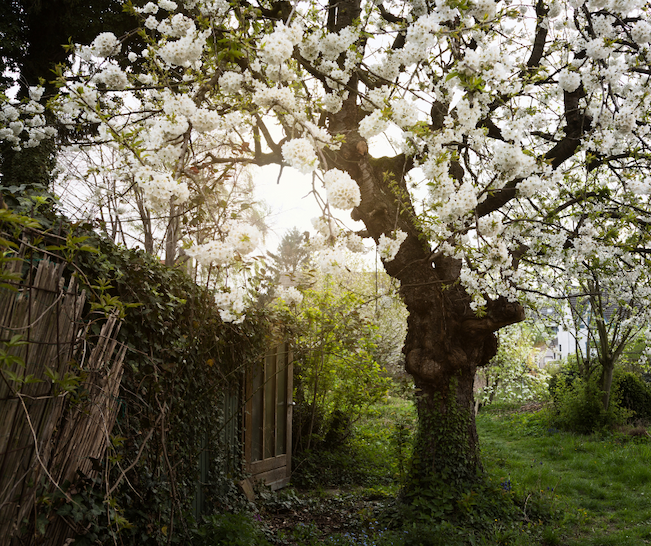
In Japanese mythology, cherry blossoms are tied to Konohanasakuya‑hime, the Shinto goddess who makes the trees bloom. She embodies renewal, beauty, and the fragile-but-powerful shift from winter into spring. Her blossoms weren’t just admired — they were read like seasonal omens. A lush bloom meant vitality and a good harvest; a sparse one signaled a harder year ahead. People gathered beneath cherry trees not just for aesthetics, but to honor the goddess’s presence and invite her blessing for the season. In this worldview, cherries weren’t fruit — they were a divine calendar.
Across Slavic traditions, cherry trees were household guardians. Planting one near your home was believed to protect the family, sweeten relationships, and keep misfortune at bay. Blossoming cherries symbolized fertility and harmony, and couples sometimes married beneath them to anchor their union in sweetness and longevity. But these trees had boundaries: cutting one down was considered deeply unlucky, as it offended the spirit believed to dwell within. The cherry tree wasn’t decoration — it was a living protector with opinions.
In Haudenosaunee (Iroquois) tradition, the black cherry tree carried both medicinal and spiritual weight. Its bark was used for coughs, fevers, and digestive support, but harvesting it wasn’t a casual act. The tree was understood to house a healing spirit, so gatherers approached with respect, took only what was needed, and offered thanks. Black cherry bark was also used in ceremonies as a bridge between the physical and spiritual realms — a reminder that healing is relational, not extractive. Here, the cherry tree wasn’t just a remedy; it was a collaborator.
A Little Science (Because We Love Receipts)
Modern research basically confirms what ancient practitioners already knew: cherries are tiny biochemical overachievers.
They’re rich in:
Anthocyanins — the pigments that give cherries their deep color and serious antioxidant power
Polyphenols — plant compounds that help defend against oxidative stress
Vitamin C — classic skin‑supporting queen
Melatonin — yes, the sleep molecule (cherries said “rest, babe”)
These compounds work together to support skin resilience, calm visible redness, and help the body recover from stress—environmental or otherwise.
So what does this actually mean in a modern formula? Cherries show up in wellness and skincare today because they bring a whole buffet of benefits:
?Gentle Resurfacing Naturally occurring fruit acids help loosen dull, lingering skin without harsh exfoliation
✨ Radiance + Tone Support Vitamin C + polyphenols = glow
? Antioxidant Defense Polyphenols help defend against environmental stress and support long-term skin resilience
?Hydration Support Natural sugars and micronutrients help maintain softness and prevent moisture loss
? Barrier-Friendly Renewal Encourages turnover without stripping or disrupting the skin’s natural balance
?Soothing anthocyanins help calm visible irritation
?Environmental defense Antioxidants help buffer against pollution + UV stress
? Recovery Melatonin + polyphenols support nighttime repair
Basically, cherries are the friend who shows up with snacks, good advice, and a portable charger.
The Cherry Shift: Where Your Skin Decides to Level Up
At The Good Stuff Botanicals, we’re not in the business of tossing buzzwords into a bottle and calling it innovation. We work with ingredients that actually do something — the kind with history, backbone, and a little bit of attitude. Cherries have been powering up bodies and rituals for centuries, and now they’re here to bring that bright, juicy, “spring is happening whether your skin is ready or not” energy straight to your routine. This is nature turned all the way up, and your skin is about to feel the difference.
Check Out Products Crafted With Cherry Cherry Oil, Cherry Kernals, Cherry Bark, Cherry Powder- Oh My!
Meet the Cherry Collection!
☀ Protective + Repairing
? Featuring Goji Berry + Cloudberry + Cherry
⭐⭐⭐⭐⭐“Cherry Berry Face Oil absorbs so well and makes my skin glow. Not like other oils that just sit on the surface of my skin. Never had a facial oil this rich absorb so well.”– Keith
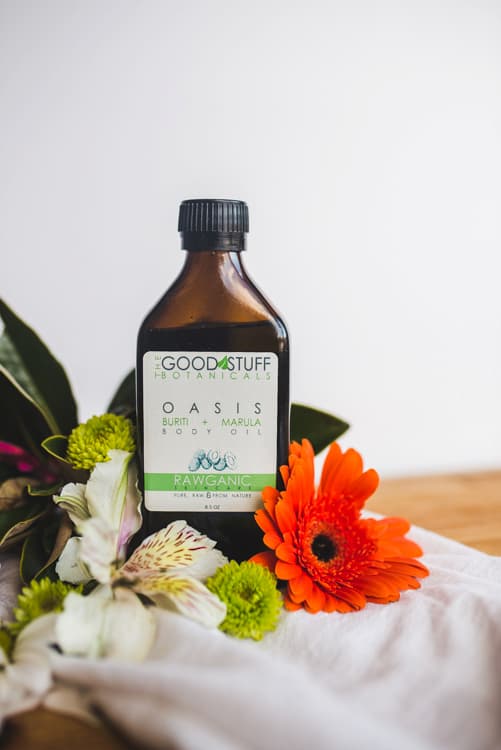
Oasis Body Oil
☀Deep Nourishment, No Nonsense
? Featuring Cherry+ Buriti + Marula
⭐⭐⭐⭐⭐ "The Best Body Oil Ever- I have taken this to Costa Rica, California, Arizona, Tofino, Hawaii... basically Oasis comes everywhere I go because it is the only oil I have found that both nourishes my skin and does not aggravate my eczema. And I'm not condoning this, but I have never burned wearing this and being sensible in the sun without using a SPF sunscreen (the key word is sensible! or sunsible). I have been ordering this for a few years now and will continue to do so. Thank you!” – Christine
That’s a Wrap on This Episode of Herbal Chronicles!?✨
Cherries aren’t just cute. They’re complex, potent, and historically respected. They’ve moved from ancient seasonal medicine to modern skincare labs without losing their original vibe: renewal, vitality, and that deep, dark, botanical magic.
Hope you enjoyed this deep dive into the legendary cherries—where history, folklore, and skincare collide. Stay tuned for the next adventure into the wild and wonderful world of botanicals. Until then, keep glowing, keep exploring, and remember: nature always has the best secrets. ?
Stay wild, stay radiant! – The Good Stuff Botanicals Team